Solutions
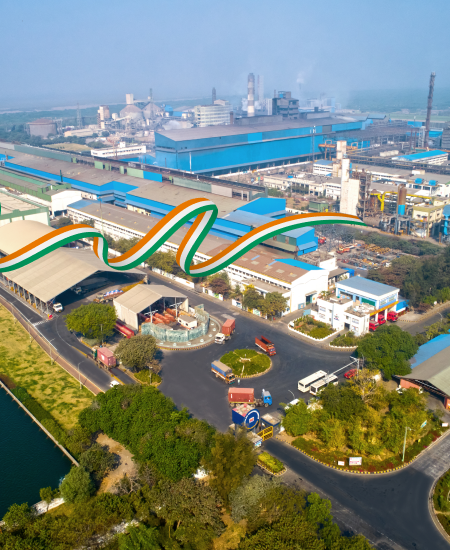
At Hirakud FRP, a focused push toward sustainable packaging is turning into measurable business results. Wood consumption is down, efficiency is up, and the unit is inching closer to its circularity goals, all through operational changes that cost little but return a lot.
The Challenge: The Environmental Cost of Traditional Shipping
Wood has long been the material of choice for securing aluminium coils and sheets during transit. It works, but it comes at a price. Heavy wood use adds to deforestation and a manufacturing plant's carbon footprint, pushes up material costs, and creates disposal headaches once the packaging has served its purpose. Because traditional wood packaging is difficult to recycle, it adds directly to industrial waste generation.
The Solution: Data-Backed Design and Reverse Logistics
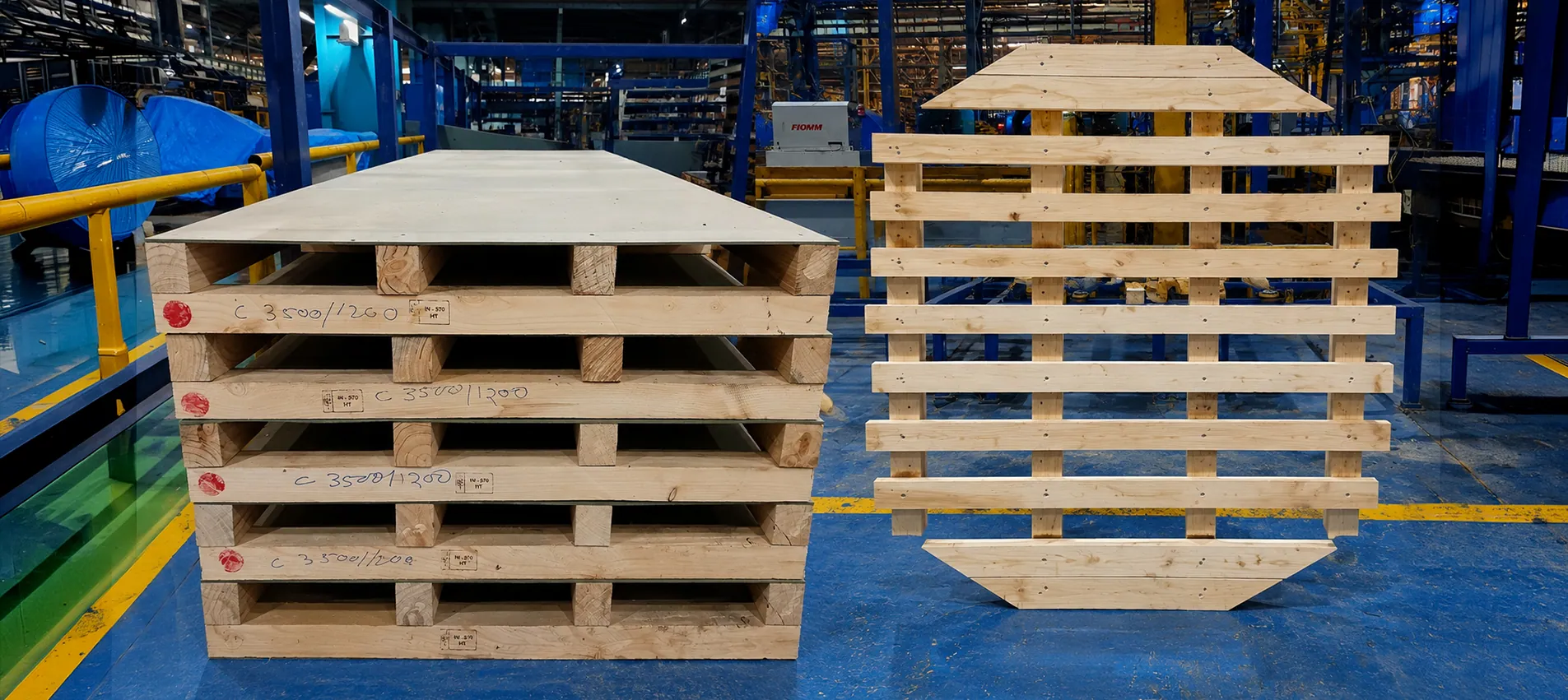
To reduce dependence on wood without compromising on product safety and quality, the Hirakud team took a Kaizen-led, data-backed approach to rethink packaging from the ground up. Pallet design was optimised using load distribution and stress analysis. Pallets were reshaped to follow the natural curvature of the coils, cutting out excess material. Full wooden surfaces gave way to runner-based configurations, which hold coils and sheets just as securely with far less material. Furthermore, pallets are now being reused with returns enabled through reverse logistics. These changes have improved material efficiency without impacting structural integrity or transit safety.
The Results: 30% Drop in Wood Consumption
The results speak for themselves. Specific wood consumption (measured in CFT/MT) has come down by 30.23 % over the three years ended FY26, and the initiative has delivered cost savings of ₹17.36 lakh . Packaging waste has fallen sharply, and material efficiency has improved alongside it.
The gains have been consistent, not a one-time spike. Specific wood consumption at the unit has dropped steadily from 0.86 in FY24 to 0.60 in FY26 —a clear trend line built on repeated, incremental improvement.
The Blueprint for Replicability across Units
A few critical elements came together to make this success possible, starting with rigorous data-led simulation and validation for every design change. Instead of relying on guesswork, the teams ran Kaizens iteratively, with each phase refining the pallet structure a little further. This continuous loop relied heavily on close collaboration across operations, quality, and sustainability teams. Because these design tweaks required minimal capital investment, internal adoption was incredibly quick.
This framework now offers strong replicability potential across the wider organisation. By establishing standardised pallet design guidelines, other Hindalco units can bypass the trial-and-error phase entirely. The low implementation cost supports faster onboarding at other plants, turning a localised circular economy victory into a scalable corporate blueprint.
This circularity initiative is a working example of what Hindalco means by sustainability in practice: reducing environmental impact, using resources more responsibly and optimally, and building green habits into everyday manufacturing operations.