Innovation
Independence is also about the ability to build for ourselves.
In manufacturing, that ability is shaped by the depth of the capabilities we develop. From securing raw materials and expanding production to making more specialised products, modernising factories and recovering materials. This is the journey Hindalco continues to invest in across its operations in India.
Built from the ground up

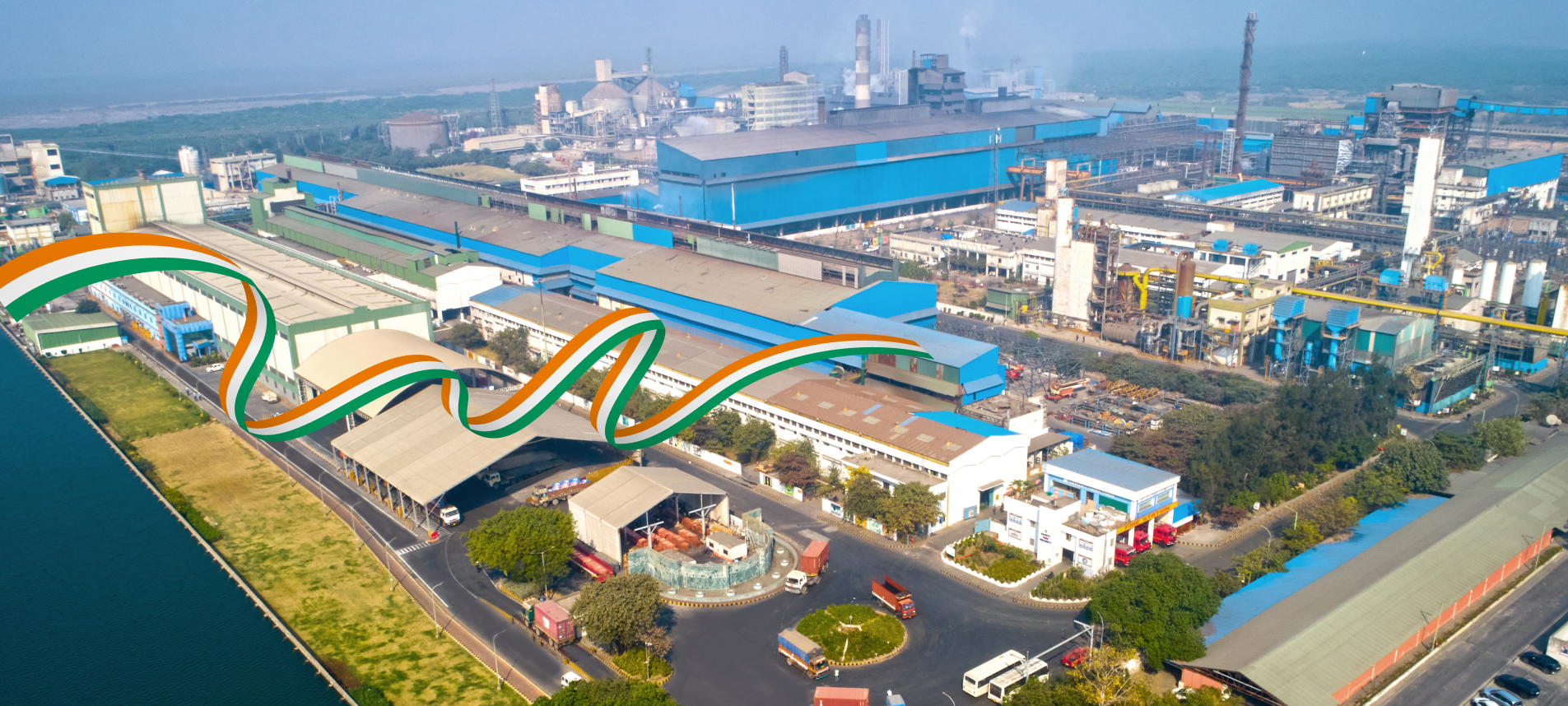
Hindalco's operations span the entire aluminium value chain—from bauxite mining and alumina refining to aluminium smelting, downstream manufacturing and recycling. Its copper business similarly spans smelting, continuous cast rod and downstream manufacturing.
Today, its India operations include 17 operational mines and 48 manufacturing plants, with production capacities of 3.81 Mn MT alumina, 1.34 Mn MT primary aluminium, 0.60 Mn MT downstream aluminium and 0.42 Mn MT copper cathodes.
Making room for more
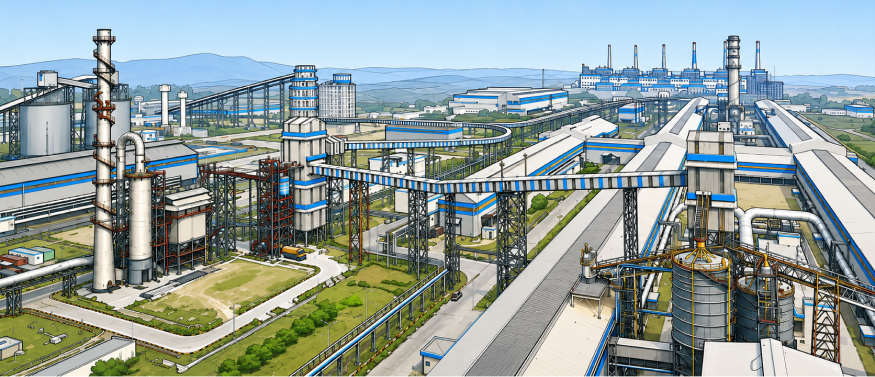
A stronger manufacturing base needs capacity to grow with it.
Hindalco is investing across its upstream operations, including an 850 KTPA Aditya Alumina Refinery, 374 KTPA of phased smelter expansion at Aditya, a new 300 KTPA copper smelter and captive coal mines at Chakla, Bandha and Meenakshi.
Together, these projects form part of around ₹50,000 crore of planned India business capex across capacity expansion, downstream growth and resource security.
From metal to material
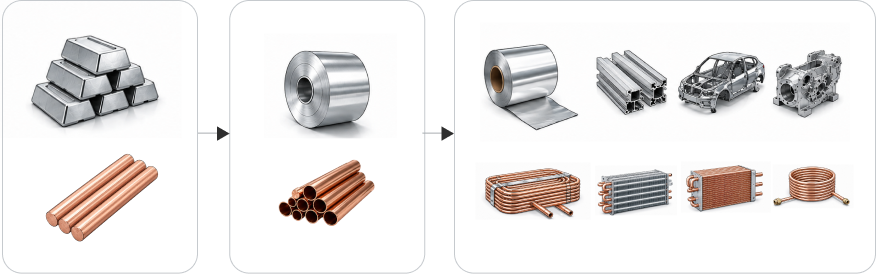
The next step is to manufacture more of the specialised materials that industries need.
Hindalco commissioned its 170 KTPA Aditya FRP 2A mill and its Aditya battery foil facility, while its battery enclosure unit at Chakan reached full operational capacity. Other additions include 25 KTPA Inner Grooved Copper Tubes, a 20 KTPA precipitated hydrate plant and new capabilities for bike and e-bike components.
The company is targeting a fourfold increase in downstream EBITDA by FY30 over FY24.
Inside the factory, change is happening too
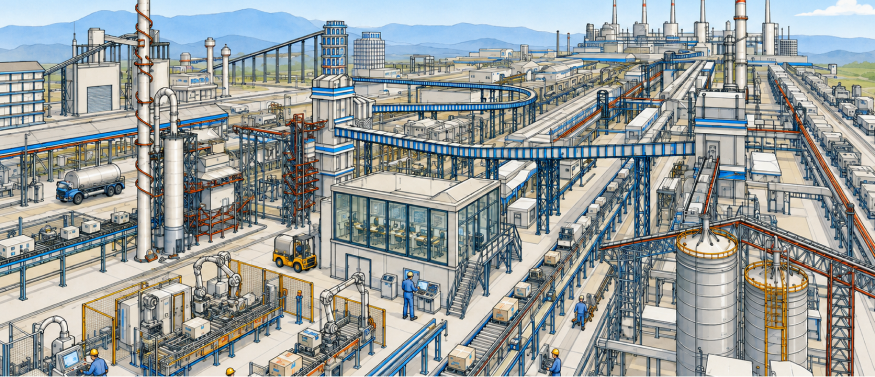
Building competitive manufacturing capability also means continually improving the way factories work.
Across its operations, Hindalco is using process digitalisation, automation, advanced process controls, predictive maintenance, real-time performance dashboards and technology upgrades to improve productivity, reliability and energy efficiency.
At Mahan, one technology improvement reduced specific energy consumption by more than 200 DC-kWh per tonne, while creating potential for around 5,000 tonnes of additional annual production from an existing potline.
What is made can be made again
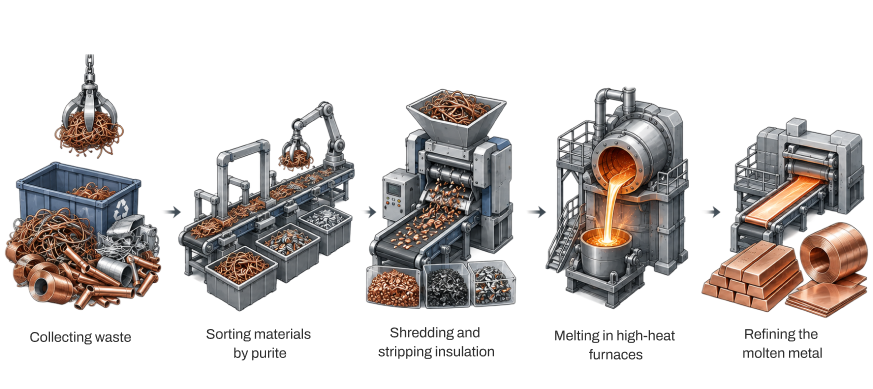
A self-reliant manufacturing ecosystem also needs to make better use of the materials already available.
Hindalco is developing a 50 KTPA copper scrap and e-waste recycling facility, alongside a 50 KT aluminium recycling facility at Aditya and a 60 KT copper recycling facility at Pakhajan. Across its operations, 88% of total waste generated was recycled or reused in FY26.
At Novelis, recycled material accounted for 61% of total input material.
Building the capability to make more
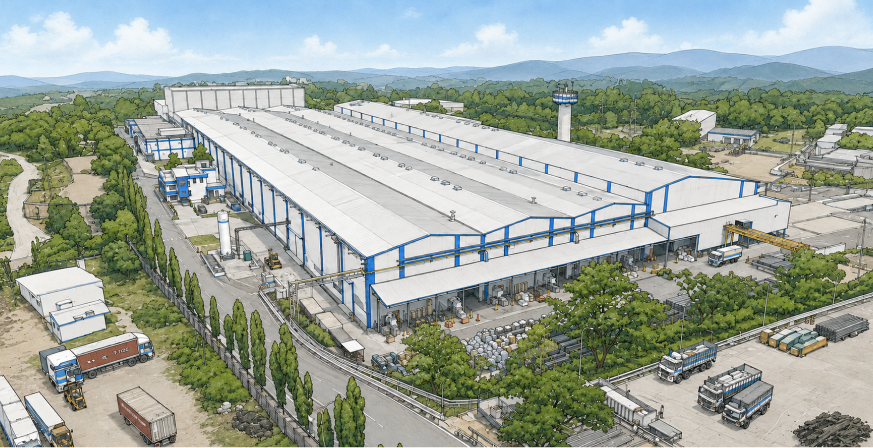
From the resources that feed a plant to the technologies that run it, and from primary metal to specialised manufacturing and recycling, each layer adds depth to India's manufacturing capability.